Fireplace vs Wood Stove: Which Burns Less Firewood?
Open fireplaces burn 3–5x more firewood than wood stoves for the same heat output. Compare efficiency, firewood consumption, and cost to choose the right appliance.
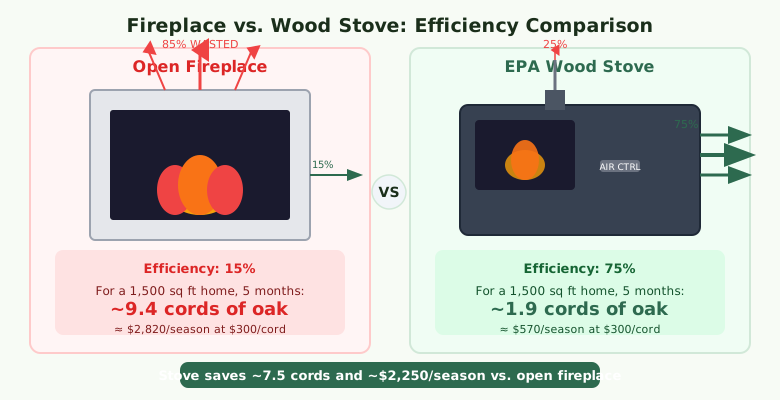
Quick Answer: An EPA-certified wood stove converts 70–80% of a log's energy into heat; an open masonry fireplace converts only 10–15%. For a 1,500 sq ft home over 5 months, that's roughly 2 cords in a wood stove vs. 8–10 cords with an open fireplace — a $1,200–$2,000 difference in annual wood costs.
The single biggest factor in how much firewood you need isn't your home's size, your insulation quality, or even the wood species you burn. It's your heating appliance. An open masonry fireplace converts roughly 15% of a log's energy into room heat. A modern EPA-certified wood stove converts 70–80%. That's a 5-fold difference — burning the same cord of oak, the wood stove heats your home five times more effectively.
This isn't a minor efficiency tweak. It fundamentally changes how much wood you need, what you spend, and how often you're feeding the fire.
The Efficiency Numbers
Here's what the U.S. EPA and the Hearth, Patio & Barbecue Association (HPBA) have documented for common wood-burning appliances:
| Appliance | Efficiency | Notes |
|---|---|---|
| EPA-certified wood stove (2020+) | 70–80% | Most efficient residential option |
| Older non-catalytic stove (pre-2015) | 60–70% | Still far better than any fireplace |
| Fireplace insert (EPA-certified) | 65–75% | Installed inside existing masonry fireplace |
| Open masonry fireplace | 10–20% | Most heat goes up the chimney |
| Outdoor wood boiler | 50–75% | Highly variable; lower with wet wood |
The 15% figure for open fireplaces isn't theoretical — it's measured. Most of a log's heat energy travels up the flue with combustion gases, including heat from your room that gets drawn into the fire to sustain combustion. An open fireplace can actually make a poorly insulated room colder near the exterior walls while the fire burns, because it draws more cold air in than the radiant heat it puts out.
Wood Consumption: Side by Side
Using our firewood calculator for a 1,500 sq ft home with average insulation over a 5-month heating season:
EPA-certified wood stove (75% efficiency), oak:
- BTU needed: 33,750,000
- Effective BTU per cord: 18,000,000
- Cords needed: 1.9
Open masonry fireplace (15% efficiency), same oak:
- BTU needed: 33,750,000
- Effective BTU per cord: 3,600,000
- Cords needed: 9.4
That's 1.9 cords vs. 9.4 cords — a difference of nearly 8 full cords. At $300/cord for oak, that's $2,700 in additional annual fuel cost from using an inefficient appliance.
The Case for a Fireplace Insert
If you have an existing masonry fireplace but want significantly better efficiency, a fireplace insert is often the best solution. An insert is a self-contained stove that installs into your existing firebox, using the masonry structure as housing while providing a sealed combustion chamber.
What inserts offer:
- EPA-certified models achieve 65–75% efficiency — similar to freestanding wood stoves
- No major construction required (unlike replacing a fireplace)
- Preserves the look of a traditional hearth while dramatically cutting fuel consumption
- Reduces creosote buildup significantly compared to an open fire
Cost: EPA-certified fireplace inserts typically run $1,500–$4,000 installed, depending on size and brand. At $2,700 annual savings on firewood (from the example above), a $3,000 insert pays for itself in roughly 13 months of primary heating use.
Firewood Piece Size: Differences Between Appliances
Wood stoves: Designed for pieces 16–18 inches long and 3–6 inches in diameter. Smaller splits (3–4 inches) for quick starts; larger splits (5–6 inches) for long sustained burns. Loading a stove with oversized pieces is one of the most common mistakes — it reduces combustion efficiency and increases creosote.
Open fireplaces: Can handle longer pieces (18–24 inches) and larger diameter logs. Split size matters less since you're not optimizing for efficiency — a roaring fire is the goal, not sustained output.
Fireplace inserts: Follow wood stove guidelines once installed (typically 16–18 inch pieces, 3–6 inch diameter), since the insert's firebox is similar in size to a freestanding stove.
Air Control and Burn Behavior
Wood stoves have adjustable primary and secondary air inlets. Opening the air intake fully produces a hot, fast fire for quick heating. Reducing air intake once the wood is burning slows combustion for longer burn times and overnight heat. This control over burn rate is a major reason stoves are so efficient — you can tune the fire to match your heat needs.
Open fireplaces have a damper but minimal fine air control. You can't reduce air to slow combustion the way you can with a stove. The fire burns at whatever rate it wants, which is usually fast. You can't do a "load and leave" overnight burn in an open fireplace safely.
Creosote implications: Smoldering, oxygen-restricted fires produce the most creosote. Modern EPA stoves are designed to minimize this through secondary combustion chambers that burn off combustion gases before they leave the firebox. Open fireplaces — particularly with low, slow fires — produce much more creosote.
Indoor Air Quality
EPA-certified stoves (especially models certified after January 2020) meet strict emissions standards — 2.5 grams of particulate matter per hour for non-catalytic stoves, 2.5 g/hr for catalytic. These models burn much cleaner than older appliances.
Open fireplaces have no equivalent standard for residential use and produce far more smoke and particulates. They're not recommended as primary heating in areas with air quality regulations.
Chimney Cleaning Frequency
With an open fireplace burning regularly: annual cleaning at minimum, often twice a year for primary users.
With a modern EPA stove: annual inspection, cleaning every 1–2 years depending on wood quality and burning habits.
Creosote buildup is directly related to combustion temperature and completeness. The higher efficiency of a modern stove translates to less creosote and less chimney maintenance. The National Fire Protection Association (NFPA 211) recommends annual chimney inspections for all wood-burning appliances.
Which Should You Use?
Use an open fireplace for:
- Occasional ambiance fires (a few times per winter)
- Supplemental heat when you want visual appeal over efficiency
- Entertaining situations where appearance matters
Use a wood stove or fireplace insert for:
- Primary home heating
- Any situation where wood consumption and cost matter
- Areas with air quality regulations
- Overnight burns requiring sustained heat
If you currently heat primarily with an open fireplace, calculate your current annual wood cost using the cord estimator, then recalculate with an EPA stove's 75% efficiency. That number is your annual savings potential — and usually a compelling case for upgrading.