Best Firewood for a Wood Stove: Top Species Ranked
The best firewood for wood stoves ranked by heat output, burn time, and coal quality. Oak, hickory, maple, ash, and more compared for home heating performance.
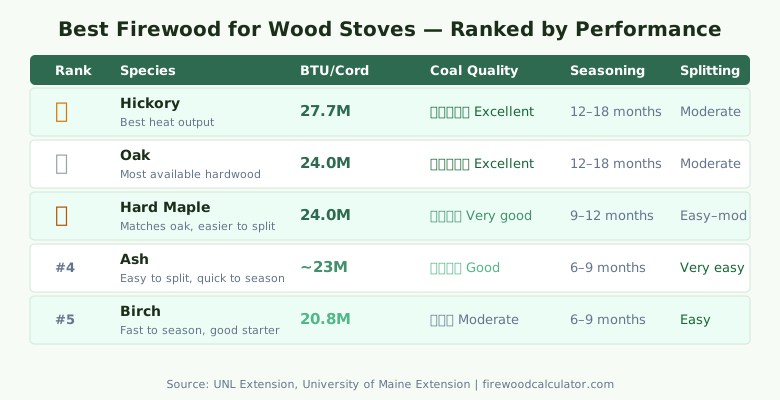
Quick Answer: The best firewood for wood stoves is dense, dry hardwood: hickory (27.7M BTU/cord), oak (24–26M BTU/cord), and maple (24M BTU/cord) are the top choices. Any species split to 4–6 inch diameter pieces and dried below 20% moisture will burn efficiently in a modern EPA-certified stove.
Not all firewood is equal in a wood stove. An open fireplace can get away with lower-quality wood because the fire is more visual than functional. A wood stove — especially a modern EPA-certified model — is an appliance, and what you burn in it directly determines how well it heats your home, how often you reload, and how frequently you need to clean the flue.
The best firewood for a wood stove is dense, dry, and produces long-lasting coals. Here's how the common species rank.
The Top 5 Species for Wood Stove Heating
1. Hickory — Best Overall Heat Output
BTU per cord: 27.7 million
Weight (seasoned): ~4,327 lbs
Coal quality: Excellent
Splitting: Moderate–difficult
Seasoning time: 12–18 months
Hickory is the hottest-burning common firewood in North America. It produces dense, long-lasting coals that hold heat for hours, making it ideal for overnight burns in wood stoves with an air-damper. One cord of hickory goes further than any other species on this list.
The downside: hickory is harder to split than most hardwoods (especially dry hickory — split it green), more expensive in most markets ($350–$450/cord), and harder to source outside the eastern and central US. If you can get it at a fair price, it's worth it.
2. Oak — Best Combination of Availability and Performance
BTU per cord: 24 million
Weight (seasoned): ~3,528 lbs
Coal quality: Excellent
Splitting: Moderate when green, difficult when dry
Seasoning time: 12–18 months
Oak is the standard against which other firewood is measured. It's widely available throughout most of the US and Canada, produces consistent, long-lasting coals, and burns cleanly in a well-maintained stove. White oak and red oak perform similarly; post oak and bur oak are also excellent choices.
The one catch: oak needs time. Fresh-cut oak at 40–50% moisture burns poorly and produces significant creosote. Give it a full year of seasoning minimum. Many experienced burners keep a 2-year supply so they're always burning at least 12–18 month-old wood.
Use our firewood needs calculator to figure out how many cords of oak to order this spring for next winter's use.
3. Hard Maple — Consistent, Clean, Widely Available
BTU per cord: 24 million
Weight (seasoned): ~3,680 lbs
Coal quality: Very good
Splitting: Easy–moderate
Seasoning time: 9–12 months
Hard maple (sugar maple) matches oak almost exactly on BTU output but seasons somewhat faster and splits more easily. It's a top choice in the northeast and upper Midwest where it's abundant. The coals are excellent — not quite as dense as hickory but very consistent.
Soft maple varieties (silver maple, red maple) produce about 18–19 million BTU per cord — still respectable, but noticeably less than hard maple. If a supplier says "maple," ask whether it's hard or soft.
4. Ash — Best for Easy Splitting and Moderate BTU
BTU per cord: 20–23 million (varies by variety)
Weight (seasoned): ~3,100 lbs
Coal quality: Good
Splitting: Very easy
Seasoning time: 6–9 months
Ash is sometimes called the "lazy person's firewood" because it's easy to split, seasons quickly, and burns reasonably well even when it's not fully dry. If you're processing your own wood and want something forgiving, ash is an excellent choice.
The coal quality isn't quite at oak or hickory level, but it's still good for sustained overnight heating. Ash was historically very common in the eastern US, though the emerald ash borer has significantly reduced ash availability in many markets. It's still findable; just increasingly rare in some regions.
5. Birch — Best for Short-Season or Secondary Heating
BTU per cord: 20.8 million
Weight (seasoned): ~2,992 lbs
Coal quality: Moderate
Splitting: Easy
Seasoning time: 6–9 months
Birch produces a bright, hot, fast-burning fire. It lights easily, smells pleasant, and seasons in about half the time of oak. The trade-off is burn time — birch burns faster than dense hardwoods, which means more frequent reloading. For a short heating season (2–4 months) or as a complement to slower-burning hardwoods, birch is excellent value.
Yellow birch outperforms white birch by a small margin. Both season quickly and are widely available in the northeast and Great Lakes region.
Species to Use Sparingly in Wood Stoves
Pine (Softwood)
BTU per cord: 15.9 million
Creosote risk: High
Best use: Kindling and fire-starting only
Pine ignites easily and burns hot initially, making it a fine fire-starter. As a primary heating fuel in a wood stove, it's problematic — the high resin content deposits creosote faster than hardwoods, and you'll need significantly more of it to produce the same heat. See our hardwood vs. softwood guide for the full BTU comparison.
Use pine for kindling. Keep a small separate pile of pine splits for starting fires, then transition to oak or hickory for the main burn.
Cedar
BTU per cord: 13 million
Creosote risk: Moderate–high
Best use: Outdoor fires, campfires, kindling
Cedar is aromatic, easy to split, and ignites fast — perfect for campfires and outdoor fire pits. In a wood stove or enclosed fireplace, it produces sparks and more creosote than hardwood. The low BTU output means you'd need almost twice as much cedar as hickory for the same heat. Not a practical primary heating fuel.
Spruce
BTU per cord: 15.5 million
Creosote risk: Moderate
Best use: Supplemental fuel, secondary heating
Spruce is cheaper per cord than hardwoods and can supplement your primary hardwood supply in a pinch. It burns reasonably hot but quickly, doesn't coal well, and produces more creosote than hardwood. If your only option during a cold snap is spruce, burn it hot with plenty of air — avoid slow smoldering fires with softwood.
What About Fruit and Nut Trees?
Apple, pear, cherry, black walnut, and pecan all make excellent firewood when available:
- Apple: Burns very hot, produces excellent coals, smells wonderful — prized for smoking and cooking
- Cherry: Burns hot, seasons in 9–12 months, pleasant aroma
- Black walnut: Similar performance to oak, though less common as firewood
- Osage orange (hedge apple): The hottest-burning North American firewood — produces 32.9 million BTU/cord, more than hickory. Very dense, very difficult to split.
These species are rarely sold commercially but worth keeping if you have access to a source.
Practical Advice: Plan Before You Order
The best firewood for your situation is the best available species in your area at a reasonable price, properly seasoned. Hickory at $500/cord is worse value than well-seasoned oak at $280/cord in most markets.
Before ordering, calculate how many cords you actually need using our firewood estimator. Overbuying isn't disaster (firewood stores well), but it ties up money and space. Underbuying in January is a real problem.
Also consider keeping a mixed supply: a full cord or two of dense hardwood (oak, hickory, or maple) for overnight burns, and a face cord of something that lights easily (birch or ash) for quick-start morning fires.