Hardwood vs Softwood Firewood: Which Is Better?
Compare hardwood and softwood firewood by BTU output, burn time, creosote, cost, and best uses. Find out which type of wood is right for your heating setup.
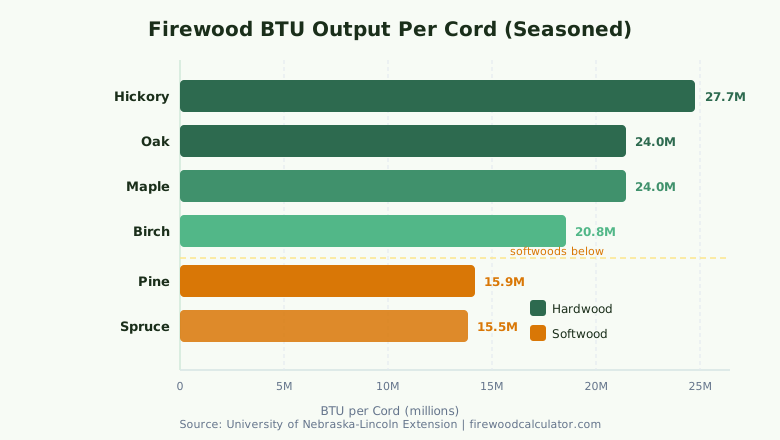
Quick Answer: For primary home heating, use hardwoods — oak, hickory, or maple — which produce 22–28 million BTU per cord. Softwoods like pine and spruce produce 14–17 million BTU per cord and are better for kindling and quick-starting fires, not sustained overnight heating.
The hardwood vs. softwood debate in the firewood world isn't really a debate — hardwood wins on heat output, burn time, and creosote production for primary home heating. But softwood has genuine uses, and dismissing it entirely leaves a useful tool in the toolbox. Here's the full picture.
The Key Difference: Wood Density
Hardwoods and softwoods aren't classified by how hard they feel in your hand — they're classified by their seeds. Hardwoods come from deciduous trees (oaks, maples, hickories); softwoods from conifers (pines, spruces, firs). The practical difference is density.
Dense wood packs more energy per unit of volume. A full cord of hickory (approximately 4,327 lbs air-dried) contains nearly twice the mass of a cord of cedar (around 2,060 lbs). Since you're buying wood by volume (the cord), that density difference translates directly to heat output per dollar.
BTU Output: Side by Side
Heat output per cord (seasoned):
| Wood Species | BTU per Cord | Weight (lbs) |
|---|---|---|
| Hickory | 27,700,000 | 4,327 |
| Oak | 24,000,000 | 3,528 |
| Maple | 24,000,000 | 3,680 |
| Birch | 20,800,000 | 2,992 |
| Pine | 15,900,000 | 2,610 |
| Spruce | 15,500,000 | 2,240 |
| Cedar | 13,000,000 | 2,060 |
Source: University of Nebraska-Lincoln Extension, University of Maine Cooperative Extension.
To put this in practical terms: if a cord of oak heats your home through a 5-month season, you'd need about 1.5 cords of birch, or nearly 1.85 cords of pine, to produce the same heat. Use our firewood needs calculator to see how species selection affects your seasonal cord count.
Burn Time and Fire Behavior
Hardwoods burn slowly and steadily once established. A well-loaded oak fire can sustain heat for 8–12 hours in a properly sealed stove, making hardwoods ideal for overnight burns. The coals hold heat exceptionally well — a hardwood fire from the night before often has live coals 8–10 hours later that can restart a new fire without kindling.
Softwoods ignite faster, burn hotter briefly, and burn out more quickly. Pine will flash up to high heat in minutes. That sounds like a benefit, but for sustained home heating it means you're loading the stove much more frequently. A fast-burning pine fire that looks impressive at 8pm may be cold ash by midnight.
The practical approach many experienced wood burners use: start fires with softwood kindling (or small pine splits) for quick ignition, then load hardwood for the sustained burn. Softwood as a fire-starter is genuinely useful. Softwood as your primary heating fuel requires 30–80% more cords per season.
Creosote Production
Creosote forms when combustion gases condense in the chimney flue before exiting. Lower-temperature fires and incomplete combustion produce more creosote. Wet wood of any species accelerates creosote formation. But softwoods — especially pine — have higher resin content, which compounds the problem.
Burning pine frequently in a wood stove or fireplace deposits significantly more creosote than burning oak or maple at the same moisture levels. The National Fire Protection Association (NFPA) recommends annual chimney inspections; if you burn softwood regularly, every-year cleaning (not just inspection) is worth considering.
Modern EPA-certified wood stoves burn at higher temperatures with better combustion efficiency, which reduces creosote formation regardless of wood species. But the chemistry of high-resin softwood still produces more deposits than low-resin hardwood under the same conditions.
Cost Comparison
Softwood is almost always cheaper per cord than hardwood. Typical 2025 price ranges in the northeastern US:
- Hickory: $350–$450 per cord
- Oak: $280–$350 per cord
- Maple: $280–$360 per cord
- Mixed hardwood: $220–$300 per cord
- Pine: $150–$220 per cord
- Mixed softwood: $120–$180 per cord
But price per cord isn't the right comparison. Price per million BTU is. Oak at $300/cord delivers about $12.50 per million BTU. Pine at $180/cord delivers about $11.30 per million BTU — surprisingly close. And oak creates far less creosote, burns longer per load, and requires fewer stove trips.
Check our firewood cost guide for a regional breakdown of current prices and a heat-cost-per-million-BTU comparison against gas and electric.
Splitting and Handling Differences
Hardwoods: Oak, hickory, and maple split most cleanly when freshly cut (green). Dry hardwood becomes dramatically harder to split — especially oak. If you're processing your own wood, split hardwood within 4–6 weeks of cutting.
Softwoods: Pine, cedar, and spruce split easily whether green or dry, thanks to lower density and straighter grain. The knotty sections of pine are the exception — they can be genuinely difficult. Cedar almost always splits cleanly.
For handling, softwood's lighter weight makes loading a stove easier and less fatiguing, which matters over the course of a heating season. A cord of cedar weighs about 2,060 lbs split; a cord of hickory weighs 4,327 lbs. If you're stacking and loading it yourself, that physical difference adds up.
Best Uses for Each
Hardwood is best for:
- Primary home heating (wood stove, fireplace insert)
- Overnight burns requiring long coal retention
- Cooking fires (smokers, outdoor fireplaces)
- Any situation where minimizing creosote matters
Softwood works well for:
- Kindling and fire-starting alongside hardwood
- Supplemental heat in mild climates with short seasons
- Campfires and occasional use fireplaces
- Quick-heat situations where you need a fire for 1–2 hours, not overnight
Mixed-Wood Loads
Many firewood suppliers sell "mixed" cords that contain both hardwood and softwood in varying ratios. The key questions when buying mixed wood:
- What percentage is softwood vs. hardwood?
- What species are included?
- Is all the wood from the same cutting date (same moisture)?
A cord of 80% oak and 20% pine is a good deal if priced between pure pine and pure oak. A cord of 80% pine and 20% oak sold as "mixed hardwood" is a rip-off. Always ask.
Before ordering your seasonal supply, run your numbers through the cord estimator and select the wood type you're actually buying — not the type you'd prefer — for an accurate estimate. Discover more about what to look for when buying firewood before you place your order.