Firewood Cost Guide: Prices by Region and Wood Type
How much does firewood cost in 2025–2026? Current prices by region, species, and delivery method, plus a full cost comparison against gas and electric heating.
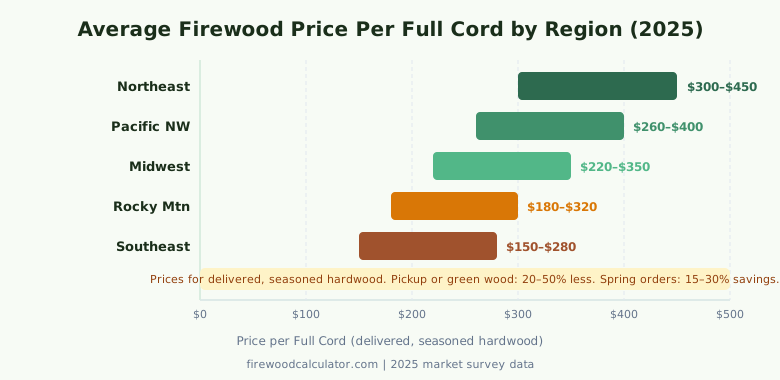
Quick Answer: Delivered, seasoned hardwood costs $200–$450 per cord depending on your region — the Northeast is most expensive, the Southeast cheapest. In an efficient EPA wood stove, firewood costs $17–$20 per million BTU, comparable to natural gas and significantly cheaper than propane or heating oil.
Firewood prices vary more than most people expect — not just by region, but by species, cut length, moisture content, and whether you're ordering a cord or half a cord. This guide breaks down current market prices and helps you figure out whether wood heat actually saves money compared to your alternatives.
Average Firewood Prices by Region (2025–2026)
Prices below reflect delivered, stacked, seasoned hardwood (primarily oak, maple, or mixed hardwood):
Northeast (New England, New York, Pennsylvania):
- Full cord: $300–$450
- Face cord: $100–$160
- Premium species (hickory, ash): $380–$500
Midwest (Ohio, Michigan, Illinois, Wisconsin):
- Full cord: $220–$350
- Face cord: $75–$120
- Mixed hardwood: $180–$280
Southeast (Virginia, North Carolina, Tennessee, Georgia):
- Full cord: $150–$280
- Mixed hardwood: $140–$220
- Softwood (pine): $100–$180
Pacific Northwest (Oregon, Washington):
- Full cord: $260–$400
- Doug fir, alder: $200–$320
- Madrona (very hot, very dense): $380–$480
Rocky Mountain / Interior West:
- Full cord: $180–$320
- Pine (common): $140–$200
- Hardwood (rare, premium): $320–$500
These are delivered prices for dry, seasoned wood cut to 16-inch lengths. Prices drop 20–35% if you pick up yourself; buying green wood runs 30–50% cheaper but requires 6–12 months of drying before use.
What Affects Firewood Prices
Species: Hickory costs more than oak, which costs more than pine — mostly because denser hardwoods require more time and labor to process, and there's higher demand for premium heating wood.
Moisture content: Seasoned wood (below 20% moisture) commands a premium over green wood. Kiln-dried wood costs 25–40% more than air-seasoned but is ready to burn immediately.
Delivery vs. pickup: Delivery adds $50–$100 to most orders, depending on distance. If you have a pickup truck and can load yourself, you can save significantly.
Cut length: Standard 16-inch pieces are most common and cheapest. Custom lengths (24-inch for large fireplaces) often add 10–15%.
Time of year: Prices typically peak in October–December when demand is highest. Buying in April through July typically saves 15–30% compared to fall prices. Use the firewood calculator in spring to estimate your seasonal needs so you can buy ahead.
Cost Per Million BTU: Firewood vs. Other Fuels
Firewood's real value shows up in cost per million BTU, which puts all fuels on the same footing:
| Fuel | Price | Efficiency | Cost per million BTU |
|---|---|---|---|
| Oak firewood (EPA stove) | $300/cord | 75% | $16.70 |
| Oak firewood (open fireplace) | $300/cord | 15% | $83.30 |
| Natural gas | $1.35/therm | 92% | $14.70 |
| Propane | $2.60/gallon | 92% | $28.30 |
| Heating oil | $3.50/gallon | 85% | $30.60 |
| Electricity (resistive) | $0.16/kWh | 100% | $46.90 |
| Heat pump | $0.16/kWh | 300% (COP 3.0) | $15.60 |
At $300/cord for oak burned in a modern EPA stove, firewood is competitive with natural gas and significantly cheaper than propane, oil, and electric resistance heat. The critical variable is your appliance efficiency — an open fireplace makes firewood the most expensive option on this list, not the cheapest.
With an efficient stove, firewood often wins. With an open fireplace, it's rarely economical as a primary heat source. This is why our heating cost calculator always asks for appliance type first.
What a Cord Should Cost: Sanity Check
Before paying, here's a rough sanity check by situation:
- $150–$200 per cord: Softwood (pine, spruce), possible if you pick up yourself
- $200–$300 per cord: Hardwood, pickup or nearby delivery in most rural areas
- $300–$400 per cord: Hardwood, delivered, standard pricing in most markets
- $400–$500 per cord: Premium species, urban areas, or difficult delivery
- $500+: Either premium kiln-dried, specialty species, or you're overpaying
If a supplier quotes you $500+ for "regular oak," get quotes elsewhere. If someone offers $100 for a "full cord" of delivered, seasoned hardwood, be skeptical — that's almost certainly a face cord or green wood.
Buying Firewood by Weight
A few suppliers sell firewood by weight rather than volume. This can actually be more transparent — you know exactly what you're getting. However, weight varies considerably with moisture content, so confirm the moisture content when buying by weight.
A cord of seasoned oak weighs roughly 3,500 lbs. A cord of green oak can weigh 4,500–5,000 lbs — you're paying 30% more for water that will evaporate before it heats your home. If buying by weight, insist on a moisture reading.
How to Save Money on Firewood
Buy in spring: Prices are lowest April–June when demand drops. Buy next winter's wood now and let it season over the summer.
Buy in bulk: Ordering 3+ cords from the same supplier often earns a discount. Suppliers prefer large deliveries over multiple small ones.
Buy green and season yourself: Green firewood is 30–50% cheaper. If you have storage space and plan ahead, this is the best value — just make sure you have 9–18 months before you need it. See our firewood seasoning guide for the full process.
Consider a wood subscription: Some rural suppliers offer annual contracts — you pay a fixed price in spring for fall delivery. You get better pricing; they get predictable revenue.
Check Craigslist and local Facebook groups: Landowners clearing trees often sell wood at below-market prices. You may need to cut and split yourself, but the savings can be 40–60%.
How Many Cords Will You Need?
Before you commit to a price, you need to know how much wood to actually buy. Use our firewood estimator to get a cord count specific to your home size, wood type, appliance, and season length. Order too little and you'll pay emergency prices mid-winter. Order too much and you'll have wood sitting around for a second year — not a disaster, but not ideal.