How to Season Firewood: The Complete Guide
Learn how to properly season firewood for maximum heat output. Covers cutting, splitting, stacking, drying time by species, and moisture testing.
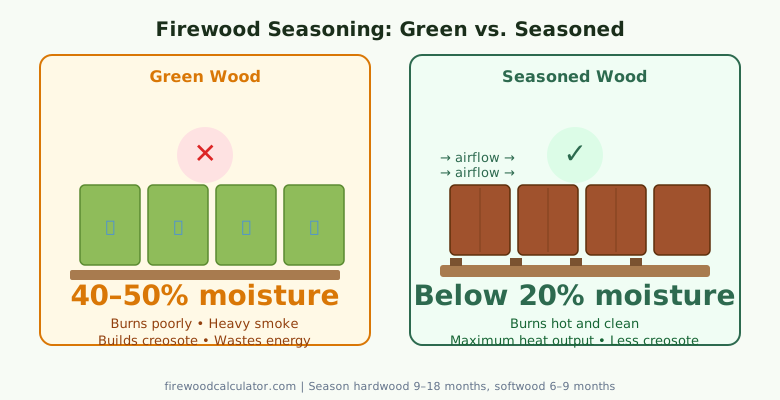
Quick Answer: Properly seasoning firewood takes 6–12 months for hardwoods and 3–6 months for softwoods. Stack wood off the ground with good airflow, cover only the top, and use a moisture meter to confirm moisture content is below 20% before burning — that's when it's ready.
Green firewood — wood cut within the last few weeks or months — can contain 40–60% moisture by weight. Seasoned firewood runs below 20%. That gap matters more than most people realize: wet wood spends a huge portion of its energy boiling off that water before it produces useful heat. Burning unseasoned wood in a wood stove is roughly like running a car engine on watered-down fuel.
The good news is that seasoning firewood is straightforward. It takes planning more than skill. Here's exactly what to do.
Why Seasoning Matters Beyond Just Efficiency
Wet wood doesn't just burn poorly — it creates real safety risks. Combustion at lower temperatures produces significantly more creosote, the sticky, flammable residue that builds up in your chimney flue. The National Fire Protection Association (NFPA) links creosote buildup to thousands of chimney fires each year. Most of those fires involve people who regularly burned green or "mixed" wood without proper drying.
Beyond safety, seasoned wood:
- Produces 25–40% more usable heat per log
- Lights faster and more reliably
- Creates less smoke (better for air quality and neighbors)
- Burns cleaner, leaving less ash
Before you start stacking, use our firewood calculator to estimate how many cords you need — that tells you how much wood to process and season before winter.
Step 1: Cut to the Right Length
Before splitting, cut logs to fit your firebox with 2–3 inches of clearance. For most wood stoves, that's 16–18 inches. Open fireplaces can typically handle 18–24 inch pieces. Measure your firebox before processing a whole cord — it's much easier to get this right at the splitting stage than to re-cut later.
Pieces that are too long won't fit. Pieces that are far too short are harder to load and tend to roll off the grate. Check your stove's manual for the manufacturer's maximum piece length recommendation.
Step 2: Split Promptly After Cutting
Splitting wood when it's fresh — within a few weeks of cutting — is dramatically easier than splitting dry wood. Freshly cut wood has high moisture content that makes it more pliable. Oak splits cleanly when green; let it dry for a year and it becomes far more resistant.
Splitting also accelerates drying. A whole round of wood exposes only the outer bark to air. Split pieces expose the interior wood grain directly, which is far more porous. A round of oak that might take 18–24 months to season will dry in 9–12 months if split promptly.
Optimal split size for most wood stoves: 3–6 inches in diameter. Larger splits (5–6 inches) burn longer and are good for overnight fires. Smaller splits (3–4 inches) ignite quickly and work well for building fires. Have a mix of both.
Step 3: Stack Off the Ground
Ground contact is the enemy of seasoning firewood. Wood sitting on bare dirt will wick moisture from the soil indefinitely, keeping the bottom layer green regardless of how long you wait. Use:
- Pallets: Free from garden centers or hardware stores, perfect for one-cord stacks
- Pressure-treated 2×4 rails: Two rails, 8 feet apart, elevated 4–6 inches off the ground
- Commercial firewood racks: Easy to move, good for smaller quantities (less than a cord)
Air circulation under the stack is just as important as keeping it off the ground. Elevating even 4–6 inches makes a measurable difference.
Step 4: Stack for Maximum Airflow
The conventional wisdom to pack wood tightly is actually counterproductive for drying. A looser stack with small gaps between pieces allows air to circulate through the entire pile, not just across the outside.
The row-stack method: Stack pieces bark-to-bark in parallel rows, leaving about half an inch between each piece. This looks less tidy than a tight stack but dries wood significantly faster.
Face the split side outward: Place the split (exposed grain) side of each piece facing outward — toward where air will flow — rather than facing inward. The grain absorbs and releases moisture much faster than bark.
Stack height: Keep stacks under 4 feet tall. Taller stacks are unstable and harder to maintain proper airflow through. For a full cord (4×4×8 feet), build two parallel stacks 4 feet high rather than one 8-foot-tall stack.
Step 5: Cover Only the Top
This is the most misunderstood step. Many people wrap their entire woodpile in a tarp and wonder why it doesn't dry. A completely covered stack traps moisture inside — you've created a tent that blocks the airflow you need.
Cover only the top two rows with a tarp or metal roofing, leaving at least 12 inches of overhang on each side. The sides of the stack must remain open to breathe. Rain hitting the bark of the top row is a minimal concern — wood bark is naturally water-resistant. The danger is moisture underneath and inside the stack.
Alternatively, a purpose-built firewood shed (three walls, a roof, open front) provides ideal protection without trapping moisture.
Drying Times by Species
How long does firewood need to season? It depends heavily on the species:
12–18 months:
- Oak (any variety) — dense grain takes time
- Hickory — densest common firewood
- Black locust — incredibly dense
9–12 months:
- Maple
- Ash
- Cherry
6–9 months:
- Birch — seasons relatively quickly
- Beech
6 months or less:
- Pine, spruce, cedar — softwoods have lower density and dry faster, though they also produce more creosote when burned
These are minimums for properly split and stacked wood. Add 2–3 months in humid climates or shaded locations. Read more about hardwood vs. softwood drying differences.
Testing Moisture Content
Don't guess. A pin-type moisture meter costs $15–25 at hardware stores and removes all the guesswork. To use it:
- Split a piece of wood to expose fresh interior grain
- Press the pins into the freshly split face (not bark)
- Read the percentage
Target: Below 20% for reliable, efficient burning. Below 15% is excellent and typical of good kiln-dried wood.
Visual tests are less reliable but useful:
- Cracked end grain: Well-seasoned wood develops radial cracks from the center outward on the cut ends
- Hollow sound: Strike two pieces of seasoned wood together — you'll hear a sharp, resonant "clack." Green wood produces a dull thud.
- Color: Seasoned wood darkens to gray-brown at the ends; green wood ends stay light and often show a slight blue-green tint
What Happens If You Burn Green Wood
Burning wet firewood isn't just inefficient — the smoke is visibly thicker, and creosote deposits form at a much higher rate. One winter of burning consistently wet wood can deposit enough creosote in a flue to require professional cleaning, and in severe cases, the deposits can ignite into a chimney fire.
If you're stuck burning wet wood during a heating emergency, burn it only in short, hot fires with plenty of dry kindling. Never let a fire smolder on wet wood for hours — that's when dangerous creosote deposits form fastest.
How to Buy Pre-Seasoned Firewood
If you don't have time to season your own, here's what to look for when buying:
- Ask how long the wood has been cut and stacked
- Request a moisture reading (reputable dealers will have a meter)
- Inspect the end grain for radial cracks
- Tap two pieces together — listen for that sharp resonant sound
- Avoid "wet" or "green" wood at any price point; the efficiency loss isn't worth any discount
Plan ahead with our firewood needs estimator, order in spring, and you'll have fully seasoned wood waiting for you when October arrives.