What Is a Cord of Firewood? Measurements Explained
A cord of firewood is 128 cubic feet — but face cords, ricks, and "truckloads" add confusion. Here's exactly what each measurement means and how to avoid being shortchanged.
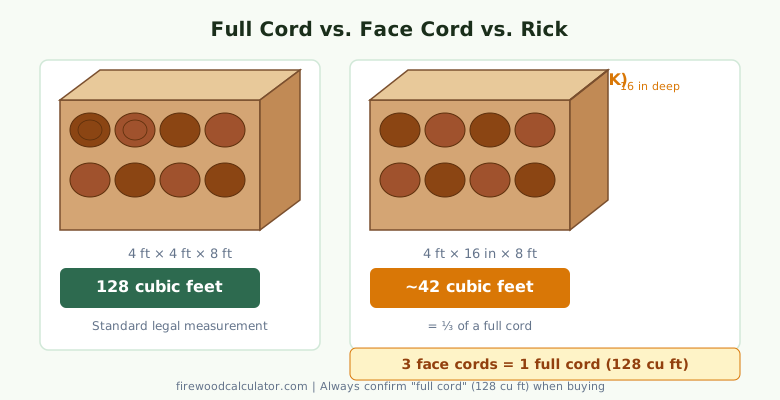
Quick Answer: A full cord of firewood is a stacked pile measuring 4 feet high × 4 feet wide × 8 feet long — 128 cubic feet total. A face cord (also called a rick) is typically 4 feet high × 8 feet long but only one log-length deep (usually 16 inches), representing about one-third of a full cord.
A cord of firewood is one of those units that sounds simple but confuses almost everyone buying wood for the first time. The reason is that "cord" gets used loosely — alongside terms like "face cord," "rick," "rick cord," "face rick," and "truckload" — in ways that vary by region and seller.
Here's the definitive breakdown.
What Is a Full Cord?
A full cord (sometimes just "cord") is the standard legal unit of firewood measurement in the United States and Canada. It equals 128 cubic feet of stacked wood.
The classic dimensions are:
- 4 feet high × 4 feet deep × 8 feet long = 128 cubic feet
But those dimensions aren't mandatory — any stack totaling 128 cubic feet qualifies. Some suppliers stack in 4×4×8; others do 2×4×16; others do 4×2×16. What matters is the total volume.
One thing to note: 128 cubic feet is the volume of the *stacked pile*, not 128 cubic feet of solid wood. A cord includes air gaps between the pieces. Actual solid wood volume in a cord runs about 80–90 cubic feet depending on how tightly pieces are stacked and how uniform their shape is.
What Is a Face Cord?
A face cord (also called a rick in many parts of the Midwest and South) is one-third of a full cord. It has the same height and width as a full cord but only about 16 inches deep — the standard length of most firewood pieces.
- 4 feet high × 16 inches (1.33 feet) deep × 8 feet long ≈ 42–43 cubic feet
So 3 face cords = 1 full cord. When a supplier quotes you "$120 per face cord," they're quoting one-third of a cord. If they're quoting "$300 per cord," ask them to confirm they mean a full cord — not a face cord.
This is the #1 source of confusion (and sometimes fraud) in the firewood market. A seller saying "I'll bring you a cord for $150" might mean a face cord if they're being loose with the term. Always confirm: "Do you mean a full cord of 128 cubic feet?"
What Is a Rick?
Rick is an informal term used primarily in the midwest and southeast US. It typically means the same thing as a face cord — roughly one-third of a full cord. However, "rick" is not a standardized legal measurement, so it can vary by seller.
Some sellers use "rick" to mean a stack 4 feet tall by 8 feet wide by however deep their wood is cut — which could be 12 inches, 16 inches, or 24 inches. A 24-inch rick is actually half a cord; a 12-inch rick is one-quarter of a cord.
When someone offers you "a rick of wood," ask: "How deep is the wood cut? And what are the stack dimensions?" This isn't being difficult — it's just basic math. A 12-inch rick and a 16-inch rick are very different amounts of wood.
What Is a "Thrown" or "Loose" Cord?
Some sellers, especially when delivering by truck, quote in "thrown cords" — wood dumped in a pile rather than stacked. A thrown cord or loose cord contains the same amount of wood as a stacked cord, but the pile is larger because random stacking creates more air gaps.
A rule of thumb: a thrown cord takes up about 160–180 cubic feet of pile volume but contains the same amount of wood as a 128-cubic-foot stacked cord. If you're buying thrown wood, confirm the volume after stacking, not before.
"A Truckload" Is Not a Measurement
This one is important. "A truckload" is not a recognized unit of firewood. It's a colloquial term that could mean anything from 1/4 cord to 1 full cord, depending on:
- Truck bed size (short bed, long bed, full-size, compact)
- Whether the wood is stacked or thrown
- How high above the rails the wood is piled
A full-size pickup (8-foot bed) stacked to the rails holds roughly 1/3 to 1/2 cord of stacked firewood. A compact pickup holds far less. Never agree to pay for "a truckload" without converting it to a verified cord measurement first.
How to Verify You're Getting a Full Cord
When your firewood is delivered or you're buying in person:
- Measure the stack: Height × depth × width in feet. Multiply to get cubic feet. Should be 128 for a cord.
- Check the piece length: If pieces are longer than 16 inches, the face depth of a single face cord is proportionally larger — 24-inch pieces give you a thicker face cord.
- Stack it yourself if possible: Thrown deliveries should always be stacked and measured before accepting payment in full.
- Get it in writing: Reputable suppliers will put the cord quantity in writing on your invoice or receipt.
Use our firewood calculator first to know exactly how many cords you need — that way you know precisely what to order and can verify the delivery.
Legal Protections for Firewood Buyers
Most US states have laws governing firewood sales. Under most state regulations:
- Firewood must be sold by a unit of measurement (cord, face cord, cubic foot) — not by "load" or "pile"
- The seller must disclose the unit being used if asked
- Weights and measures offices in most states can investigate complaints about short firewood delivery
If you believe you've been shortchanged, contact your state's Department of Agriculture or Weights and Measures Bureau. Legitimate suppliers welcome verification; the ones who don't are worth reporting.
BTU Per Cord: What You're Really Buying
The other thing to know about cords is that not all cords are equal in heat output. A cord of hickory delivers 27.7 million BTU; a cord of cedar delivers only 13 million. You might see cedar at half the price of hickory per cord, but you're actually getting less than half the heat.
Our firewood BTU chart breaks down all common species by heat output so you can compare value accurately. And once you know your wood type, the firewood needs estimator converts your BTU requirements into an exact cord count.
Quick Reference Summary
| Term | Volume | Notes |
|---|---|---|
| Full cord | 128 cubic feet | Legal standard, 4×4×8 ft |
| Face cord / rick | ~42 cubic feet | ⅓ of a full cord (16-inch wood) |
| Half cord | 64 cubic feet | Exactly half, less common |
| Thrown cord | ~160–180 ft³ piled | Same wood as full cord, just loose |
| Truckload | Varies widely | NOT a real unit — always clarify |